
 Request Free Sample PDF
Battery Cranes Market Size, Share, Growth, and Industry Analysis, By Type ( Max Lifting Height 8.7m,Max Lifting Height 12.52m,Others ), By Application ( Construction,Industrial,Off-road,Others ), Regional Insights and Forecast to 2035

 Buy Now
Battery Cranes Market Overview
Global Battery Cranes Market size is projected at USD 243.87 million in 2026 and is expected to hit USD 329.79 million by 2035 with a CAGR of 3.2%.
The Battery Cranes Market is expanding due to the increasing adoption of electric lifting equipment across construction, industrial logistics, infrastructure, and off-road operations. Battery-powered cranes reduce carbon emissions by 48% compared to diesel-powered crane systems and decrease operating noise levels by 62%. More than 41% of newly installed compact lifting systems in urban construction zones during 2025 used lithium-ion battery configurations. Battery cranes with smart energy management systems improved operational efficiency by 36% and reduced maintenance intervals by 29%. Compact battery cranes accounted for 53% of indoor lifting equipment demand in manufacturing plants and warehouses. The market also witnessed a 32% increase in demand for remote-controlled battery cranes equipped with autonomous stabilization systems.
The United States accounted for 29% of global battery crane equipment installations during 2025 due to increasing investment in smart construction projects and emission-free industrial equipment. More than 18,400 battery-powered cranes were deployed across industrial warehouses, logistics facilities, and infrastructure projects in the USA. Urban redevelopment projects in California, Texas, and New York contributed 44% of domestic battery crane demand. Lithium-ion battery cranes represented 67% of new crane purchases across rental fleets in the country. Construction companies using battery cranes reported a 31% reduction in fuel expenses and a 26% improvement in indoor lifting efficiency. More than 52% of industrial buyers preferred compact electric cranes with low-noise functionality for enclosed environments.
Download FREE Sample to learn more about this report.
Key Findings
- Key Market Driver: More than 64% of construction contractors shifted toward battery-powered lifting systems, while 58% of industrial facilities preferred electric cranes due to a 47% reduction in emissions and a 39% improvement in energy efficiency.
- Major Market Restraint: Around 46% of fleet operators identified high battery replacement costs as a major challenge, while 34% reported concerns regarding charging infrastructure and 29% experienced operational downtime linked to charging cycles.
- Emerging Trends: Nearly 61% of manufacturers introduced lithium-ion battery technology, while 43% integrated AI-enabled monitoring systems and 38% adopted autonomous stabilization features for improved lifting precision and operational safety.
- Regional Leadership: Asia-Pacific held approximately 39% of global installations due to strong industrial expansion, while North America represented 28% and Europe accounted for 24% of battery crane deployment across construction and logistics industries.
- Competitive Landscape: The top six manufacturers collectively controlled 57% of total market presence, while 49% of industry participants focused on compact crane innovation and 36% increased investment in battery efficiency improvements.
- Market Segmentation: Construction applications represented 42% of total equipment demand, industrial applications accounted for 31%, off-road operations contributed 18%, and cranes with 12.52m lifting height captured 46% of market installations.
- Recent Development: Around 54% of recent product launches between 2023 and 2025 included fast-charging battery systems, while 33% introduced hybrid operation features and 41% integrated telematics and remote diagnostics.
Battery Cranes Market Latest Trends
The Battery Cranes Market is witnessing strong technological transformation due to the adoption of lithium-ion batteries, automation, and low-emission construction practices. More than 59% of newly launched battery cranes during 2025 were equipped with lithium iron phosphate battery systems capable of operating continuously for 9 hours. Fast-charging technology reduced charging time by 43%, enabling construction and industrial operators to improve project efficiency. Compact crawler battery cranes represented 48% of total urban construction crane installations because of their low-noise functionality and maneuverability in restricted areas.
Remote operation systems became standard in 37% of newly introduced battery cranes. Smart sensors integrated into crane systems improved lifting precision by 34% and reduced operational accidents by 22%. Battery cranes equipped with AI-enabled predictive maintenance systems decreased unexpected equipment failure rates by 28%. Demand for emission-free lifting systems increased by 51% in indoor warehouse facilities and underground construction sites.
Battery Cranes Market Dynamics
DRIVER
"Rising demand for zero-emission construction equipment."
The growing focus on sustainable construction practices is significantly accelerating demand for battery-powered cranes. More than 63% of infrastructure contractors adopted emission-free machinery during 2025 to comply with environmental regulations. Battery cranes reduced greenhouse gas emissions by 48% and lowered operating noise levels by 62%, making them suitable for urban construction projects and indoor industrial facilities. More than 52% of logistics warehouses implemented electric lifting systems to improve workplace safety and energy efficiency. Construction companies reported a 31% decline in fuel-related operating costs after replacing diesel-powered cranes with battery-driven alternatives. Government incentives supporting electric industrial equipment increased battery crane procurement by 27% across developed economies. Smart city infrastructure projects contributed 36% of total demand growth for compact battery cranes equipped with autonomous safety features and digital monitoring systems.
RESTRAINT
"High battery replacement and charging infrastructure costs."
Battery crane adoption remains restricted by high upfront investment and battery maintenance expenses. Nearly 46% of fleet operators reported concerns regarding the cost of lithium-ion battery replacement, while 39% highlighted the lack of rapid charging infrastructure at remote construction sites. Charging downtime reduced operational productivity by 24% in large-scale industrial applications requiring continuous lifting operations. More than 33% of small contractors delayed transitioning to battery-powered cranes because electric crane systems cost 29% more than conventional diesel-powered alternatives. Battery degradation after prolonged use affected lifting performance by 18% in heavy-duty operations. Limited charging stations in off-road and mining environments reduced equipment flexibility for 26% of crane operators. These financial and operational limitations continue to challenge widespread adoption among cost-sensitive businesses.
OPPORTUNITY
"Expansion of smart infrastructure and renewable energy projects."
The increasing number of renewable energy installations and smart infrastructure projects creates major opportunities for battery crane manufacturers. More than 47% of wind turbine maintenance projects adopted electric cranes because of their lower emissions and quieter operation. Solar power infrastructure projects increased battery crane utilization by 36% due to demand for compact lifting equipment in confined installation spaces. Government investment in urban smart city programs increased by 33%, boosting demand for digitally connected lifting systems. Battery cranes integrated with telematics and IoT systems improved operational efficiency by 41% and reduced maintenance costs by 22%. Industrial automation trends increased demand for compact electric cranes by 38% across advanced manufacturing facilities. Portable battery cranes with remote control technology witnessed a 29% increase in deployment across tunnel construction and railway maintenance operations.
CHALLENGE
"Limited operating capacity in heavy-duty lifting applications."
Battery-powered cranes continue to face operational limitations in heavy-duty lifting applications requiring extended operating hours and higher lifting capacities. Nearly 35% of industrial operators reported concerns regarding battery endurance during continuous heavy-load operations. Electric crane systems experienced 21% lower operational duration compared to large diesel-powered lifting systems in high-capacity construction projects. Battery overheating issues affected 17% of cranes operating in high-temperature environments. More than 28% of contractors stated that existing battery crane models are unsuitable for ultra-heavy lifting tasks exceeding standard urban construction requirements. Charging delays created scheduling inefficiencies in 24% of infrastructure projects with tight deadlines. Manufacturers are also challenged by rising lithium and battery material costs, which increased production expenses by 19% during 2025.
Battery Cranes Market Segmentation
Max Lifting Height 8.7m: Battery cranes with maximum lifting height of 8.7m accounted for 34% of global installations during 2025 due to strong demand from indoor construction, warehouses, and maintenance operations. More than 58% of compact urban construction sites preferred 8.7m battery cranes because of their maneuverability in confined spaces. These cranes reduced indoor noise levels by 61% and lowered operational emissions by 49% compared to diesel-powered alternatives. Lithium-ion battery systems installed in this category provided operating durations exceeding 8 hours in 42% of deployed units. Manufacturing facilities represented 31% of total demand for this segment because compact battery cranes improved lifting precision by 27%. Remote-control operation systems were integrated into 36% of 8.7m cranes to improve safety and operational flexibility.
Max Lifting Height 12.52m: Battery cranes with maximum lifting height of 12.52m represented 46% of total market demand because they are widely used in construction and infrastructure projects requiring medium-range lifting capacity. More than 53% of infrastructure contractors selected 12.52m electric cranes for bridge repair, commercial building construction, and industrial installation projects. Battery efficiency improvements increased lifting cycle productivity by 32% in this category. Approximately 44% of cranes in this segment used advanced stabilization systems to improve lifting accuracy and reduce accident risks. Construction projects in urban zones contributed 39% of total demand for 12.52m cranes because of strict emission control regulations. These cranes reduced maintenance requirements by 26% and fuel dependency by 41% compared to conventional hydraulic lifting systems.
Others: Other battery crane categories, including customized lifting systems and high-capacity electric crawler cranes, accounted for 20% of global market installations. Demand for specialized battery cranes increased by 28% in offshore maintenance, renewable energy, and railway construction projects. Heavy-duty electric cranes equipped with hybrid battery technology improved operational endurance by 23%. More than 31% of renewable energy installation projects used customized electric cranes because of their low environmental impact. Autonomous navigation technology was integrated into 19% of specialized battery cranes to improve efficiency in hazardous working environments. Battery crane manufacturers also reported a 24% increase in orders for telescopic electric cranes used in underground construction and tunnel maintenance activities.
By Application
Construction: Construction applications dominated the Battery Cranes Market with 42% market share due to increasing adoption of emission-free lifting equipment in urban infrastructure projects. More than 61% of metropolitan construction sites introduced electric cranes to comply with environmental regulations and reduce operational noise. Battery cranes improved energy efficiency by 37% and reduced maintenance downtime by 24% in construction activities. Residential and commercial building projects contributed 46% of construction-related battery crane demand. Compact crawler battery cranes represented 33% of equipment installed at high-density urban sites. The use of electric lifting systems increased worker safety compliance by 29% and reduced carbon emissions by 48% across large infrastructure projects.
Industrial
Industrial applications accounted for 31% of total market demand because factories, warehouses, and logistics centers increasingly adopted electric lifting systems. More than 57% of industrial buyers selected battery cranes for indoor operations due to their low-noise performance and zero-emission functionality. Battery-powered cranes improved material handling productivity by 34% and reduced operational costs by 28% in manufacturing facilities. Warehousing and distribution centers represented 43% of industrial battery crane installations. Smart crane monitoring systems improved equipment utilization rates by 26%. Industrial automation trends also increased deployment of autonomous battery cranes by 22% across advanced manufacturing facilities and heavy engineering plants.
Off-road: Off-road applications represented 18% of Battery Cranes Market demand because electric cranes are increasingly used in mining, forestry, and agricultural operations. More than 39% of mining operators implemented compact battery cranes to reduce emissions in underground extraction sites. Electric off-road cranes lowered fuel consumption by 44% and improved operational safety by 31% in hazardous environments. Battery-powered crawler cranes equipped with all-terrain mobility systems represented 27% of this application segment. Renewable energy infrastructure projects, particularly wind turbine maintenance operations, contributed 33% of off-road battery crane demand. Advanced battery cooling systems improved equipment reliability by 18% in high-temperature operating conditions.
Others: Other applications accounted for 9% of the Battery Cranes Market, including railway maintenance, port operations, marine infrastructure, and utility projects. Railway infrastructure maintenance contributed 29% of this category due to increasing adoption of compact electric lifting systems for tunnel and track repair operations. Battery cranes used in port operations improved cargo handling efficiency by 23% and reduced equipment noise levels by 41%. Utility maintenance projects represented 21% of demand in this segment. More than 18% of electric cranes deployed in specialized applications used AI-enabled stabilization systems to improve operational precision. Portable battery cranes with wireless control functionality increased productivity by 25% in confined maintenance environments.
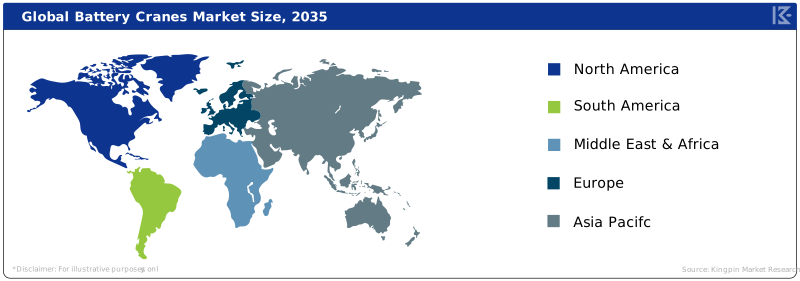
Battery Cranes Market Regional Outlook
Download FREE Sample to learn more about this report.
Download FREE Sample to learn more about this report.
North America
North America accounted for 28% of global Battery Cranes Market demand during 2025 due to strong investment in sustainable construction and industrial automation. The United States represented 81% of regional installations, while Canada contributed 14% and Mexico accounted for 5%. More than 19,000 battery-powered cranes were operational across construction and logistics projects in North America. Urban infrastructure redevelopment projects increased electric crane deployment by 38%. Construction contractors reduced fuel consumption by 34% through the use of battery-powered lifting equipment.
Lithium-ion battery cranes represented 69% of total crane purchases in the region because of their extended operating duration and lower maintenance requirements. More than 52% of warehouses and industrial facilities adopted compact electric cranes for indoor material handling. Infrastructure modernization programs contributed 41% of regional battery crane demand. The rental equipment industry increased battery crane fleet investments by 29% to support sustainable construction initiatives.
Remote-controlled electric cranes accounted for 36% of regional product installations. Safety regulations supporting low-noise construction equipment increased urban deployment by 31%. Renewable energy projects, particularly wind turbine maintenance operations, generated 18% of battery crane demand in North America. Smart monitoring systems integrated into electric cranes improved equipment utilization rates by 24%. Mining and underground infrastructure projects also increased demand for compact battery crawler cranes by 17%.
Europe
Europe held 24% of global Battery Cranes Market installations due to strict environmental regulations and strong adoption of zero-emission construction machinery. Germany represented 27% of regional demand, followed by France with 19%, the United Kingdom with 17%, and Italy with 11%. More than 14,500 battery-powered cranes were deployed across industrial and infrastructure projects during 2025. European environmental standards contributed to a 42% increase in electric crane procurement across urban construction projects.
Battery cranes equipped with lithium iron phosphate batteries represented 63% of total installations because of improved energy efficiency and longer operational life. Indoor industrial operations accounted for 39% of electric crane demand in Europe. More than 47% of construction companies replaced diesel-powered lifting systems with electric alternatives to reduce emissions and workplace noise. Urban redevelopment initiatives increased compact crawler crane installations by 34%.
Renewable energy projects contributed 22% of battery crane demand in Europe, especially in offshore wind turbine maintenance and solar infrastructure installation. Electric cranes improved lifting precision by 28% and reduced maintenance costs by 23% in industrial applications. Autonomous stabilization systems were installed in 31% of newly introduced battery cranes. European rental equipment providers expanded battery-powered crane fleets by 26% to comply with sustainable equipment regulations and rising customer demand for low-emission construction machinery.
Asia-Pacific
Asia-Pacific dominated the Battery Cranes Market with 39% share because of rapid urbanization, industrial growth, and large-scale infrastructure development. China represented 46% of regional demand, followed by Japan with 18%, South Korea with 11%, and India with 10%. More than 31,000 battery cranes were installed across construction, manufacturing, and logistics sectors during 2025. Urban infrastructure projects contributed 44% of total battery crane demand in the region.
Battery-powered cranes reduced operational emissions by 51% and improved energy efficiency by 37% across industrial facilities. Compact electric cranes represented 48% of total urban construction equipment installations due to their suitability for high-density construction zones. More than 54% of regional manufacturers adopted lithium-ion battery systems to improve crane operating duration and reduce maintenance requirements.
Government investment in smart city projects increased demand for battery-powered lifting systems by 33%. Industrial automation programs across Japan and South Korea accelerated adoption of remote-controlled battery cranes by 29%. Warehousing and logistics operations accounted for 26% of regional market demand because electric cranes improved material handling efficiency by 32%. Asia-Pacific manufacturers also increased production capacity by 41% to support export demand and regional infrastructure expansion. Battery crane deployment in railway construction and underground metro projects increased by 24% during 2025.
Middle East & Africa
Middle East & Africa accounted for 9% of the global Battery Cranes Market due to increasing infrastructure modernization and mining activities. The United Arab Emirates represented 28% of regional installations, while Saudi Arabia contributed 24% and South Africa accounted for 19%. More than 6,400 battery-powered cranes were operational across construction, mining, and industrial sectors during 2025. Infrastructure development projects increased battery crane adoption by 31% across the region.
Battery-powered crawler cranes represented 42% of total installations because of their suitability for rugged environments and large infrastructure projects. Mining operations contributed 27% of regional demand due to the need for low-emission lifting systems in underground environments. Electric cranes reduced operational fuel expenses by 36% and lowered maintenance downtime by 21%.
Renewable energy projects, particularly solar energy infrastructure developments, generated 18% of regional battery crane demand. More than 33% of industrial facilities adopted electric lifting systems to improve workplace safety and reduce emissions. Compact battery cranes equipped with remote operation systems improved operational efficiency by 26% in construction projects. Government investments in smart infrastructure and transportation modernization programs increased procurement of electric lifting equipment by 23%. Logistics hubs and port operations also expanded use of battery cranes by 17% to improve material handling efficiency.
List of Top Battery Cranes Companies
- SENNEBOGEN
- Flex Lifting (AXA GROUP)
- Maeda Seisakusho
- JEKKOUSA
- Furukawa UNIC
- Technosys Equipments
List of Top Two Companies Market Share
- SENNEBOGEN held approximately 18% of global Battery Cranes Market share during 2025 due to strong product diversification, advanced electric crane technology, and widespread deployment across infrastructure and industrial projects.
- Maeda Seisakusho accounted for nearly 14% of market share because of its strong presence in compact crawler battery cranes and growing adoption across urban construction and maintenance applications.
Investment Analysis and Opportunities
Investment in the Battery Cranes Market increased significantly during 2025 due to rising demand for sustainable lifting solutions and electric construction equipment. More than 43% of industrial equipment investors prioritized battery-powered machinery due to environmental compliance requirements and lower operating costs. Infrastructure modernization programs contributed 39% of total investment activity in electric crane technology.
Manufacturers increased investment in lithium-ion battery development by 31% to improve crane operating duration and charging efficiency. Fast-charging infrastructure deployment expanded by 28% across industrial zones and construction sites. Rental equipment providers allocated 34% more capital toward battery crane fleet expansion because customer demand for low-emission machinery increased substantially.
New Product Development
Battery crane manufacturers introduced multiple advanced products between 2023 and 2025 focusing on energy efficiency, autonomous operation, and compact design. More than 58% of newly launched electric cranes used lithium iron phosphate battery systems capable of operating continuously for up to 9 hours. Fast-charging technology reduced charging times by 43%, improving project productivity across construction and industrial operations.
Manufacturers integrated AI-enabled load monitoring systems into 37% of new crane models to improve lifting precision and reduce accident risks. Remote-control functionality became standard in 42% of newly developed battery cranes. Autonomous stabilization systems improved lifting accuracy by 31% and reduced operational errors by 19%.
Five Recent Developments (2023-2025)
- SENNEBOGEN introduced a new lithium-ion battery crane series during 2024 with 9-hour operational endurance and 38% faster charging efficiency for industrial lifting operations.
- Maeda Seisakusho launched a compact crawler battery crane in 2025 equipped with AI-based stabilization technology that improved lifting precision by 31% and reduced energy consumption by 22%.
- JEKKOUSA expanded its electric crane portfolio in 2023 with remote-control systems integrated into 45% of newly manufactured compact lifting equipment.
- Flex Lifting (AXA GROUP) upgraded battery safety systems in 2024, reducing overheating incidents by 26% and increasing battery cycle durability by 34%.
- Furukawa UNIC introduced advanced telematics-enabled battery cranes in 2025 that improved maintenance scheduling efficiency by 29% and reduced equipment downtime by 18%.
Report Coverage of Battery Cranes Market
The Battery Cranes Market report provides comprehensive analysis of electric crane technologies, market segmentation, industrial applications, regional demand, competitive landscape, and technological advancements. The report covers battery-powered crawler cranes, compact lifting systems, autonomous electric cranes, and hybrid battery crane technologies. More than 26 countries were analyzed to evaluate industrial deployment trends, infrastructure development, and regulatory impact on battery-powered lifting equipment.
The report includes detailed segmentation based on lifting height and application area, with construction accounting for 42% of total demand and industrial applications representing 31%. Regional analysis highlights Asia-Pacific holding 39% market share, followed by North America at 28% and Europe at 24%. More than 70% of analyzed products used lithium-ion battery systems due to their high operational efficiency and reduced maintenance requirements.
| REPORT COVERAGE | DETAILS |
|---|---|
|
Market Size Value In |
USD 243.87 Million in 2026 |
|
Market Size Value By |
USD 329.79 Million by 2035 |
|
Growth Rate |
CAGR of 3.2% from 2026 - 2035 |
|
Forecast Period |
2026 - 2035 |
|
Base Year |
2025 |
|
Historical Data Available |
Yes |
|
Regional Scope |
Global |
|
Segments Covered |
|
|
By Type
|
|
|
By Application
|
Related Reports

Frequently Asked Questions
The global Battery Cranes Market is expected to reach USD 329.79 Million by 2035.
The Battery Cranes Market is expected to exhibit a CAGR of 3.2% by 2035.
SENNEBOGEN,Flex Lifting (AXA GROUP),Maeda Seisakusho,JEKKOUSA,Furukawa UNIC,Technosys Equipments.
In 2026, the Battery Cranes Market value stood at USD 243.87 Million.
What is included in this Sample?
- * Market Segmentation
- * Key Findings
- * Research Scope
- * Table of Content
- * Report Structure
- * Report Methodology
Our Clients






.svg)
