
 Request Free Sample PDF
Amazon Marketing Service Market Size, Share, Growth, and Industry Analysis, By Type (Cloud-Based, Web-Based), By Application (Large Enterprises, SMEs), Regional Insights and Forecast to 2035

 Buy Now
Amazon Market Overview
The global Amazon Marketing Service Market size estimated at USD 19999.3 million in 2026 and is projected to reach USD 44420.25 million by 2035, growing at a CAGR of 9.28% from 2026 to 2035.
The Amazon Market represents one of the largest digital commerce ecosystems globally, connecting buyers, sellers, brands, advertisers, logistics providers, and cloud-based commerce service operators. As of 2025, the marketplace hosted approximately 9.7 million registered sellers, with nearly 1.9 million active sellers conducting transactions regularly. Third-party merchants accounted for more than 60% of total units sold through the platform, highlighting the dominance of independent sellers. More than 350 million products were listed across multiple categories, including electronics, apparel, home goods, healthcare products, and consumer essentials. The Amazon Market continues to expand through digital commerce automation, fulfillment services, artificial intelligence integration, and marketplace optimization tools.
The United States remains the largest Amazon Market globally, with approximately 1.1 million active sellers and more than 170 million Prime members. Nearly 38.1% of global Amazon sellers are based in the U.S., while over 255 million active users interact with the platform annually. More than 60% of product sales in the country originate from third-party merchants. Around 550 new sellers join the platform daily, while approximately 82% of professional merchants utilize fulfillment services to improve delivery efficiency. The U.S. market benefits from advanced logistics infrastructure, digital advertising adoption, and strong consumer preference for online shopping across over 30 major product categories.

Download FREE Sample to learn more about this report.
Key Findings
- Key Market Driver: Third-party seller participation exceeds 60%, fulfillment service adoption reaches 82%, online shopping penetration contributes 71%, and Prime-based purchasing activity supports 68% of marketplace transactions.
- Major Market Restraint: Seller competition affects 74%, advertising cost pressures impact 61%, account compliance concerns influence 43%, and marketplace saturation affects 57% of active merchants.
- Emerging Trends: Artificial intelligence adoption among sellers exceeds 25%, fulfillment utilization reaches 82%, mobile commerce contributes 64%, and retail media advertising participation exceeds 55%.
- Regional Leadership: North America accounts for 46%, Europe contributes 27%, Asia-Pacific represents 21%, and Middle East & Africa hold 6% of marketplace activity.
- Competitive Landscape: Independent sellers contribute 60%, profitable sellers exceed 86%, U.S.-based merchants represent 38.1%, and fulfillment-enabled sellers account for 82% of active participants.
- Market Segmentation: Cloud-based deployment accounts for 72%, web-based solutions hold 28%, large enterprises contribute 58%, and SMEs represent 42% of service utilization.
- Recent Development: AI-generated listings increased 31%, seller automation adoption grew 28%, retail media participation expanded 24%, and logistics optimization usage reached 35%.
Amazon Market Latest Trends
The Amazon Market is undergoing rapid transformation driven by artificial intelligence, fulfillment optimization, retail media expansion, and seller automation. More than 1.9 million active sellers compete across the marketplace ecosystem, while over 300 million shoppers make at least one purchase annually. Third-party merchants continue strengthening their market position, accounting for more than 60% of units sold. Approximately 82% of sellers utilize fulfillment services to improve delivery performance and customer satisfaction.
Artificial intelligence has become a major trend across the Amazon Market. More than 900,000 sellers utilize AI-powered tools for product listings, keyword optimization, advertising management, and customer engagement. AI-supported content creation has improved listing productivity while reducing time-to-market for new products. Retail media advertising has become increasingly important, with sellers allocating larger portions of marketing budgets toward sponsored placements and search visibility improvements. Mobile commerce continues gaining momentum, supported by over 60 million shopping app downloads recorded during 2025. Prime membership engagement remains strong, with approximately 200 million members globally. Marketplace operators increasingly focus on same-day delivery, inventory optimization, and automated fulfillment capabilities. In addition, cross-border commerce continues expanding, enabling sellers to access customers across more than 25 international marketplaces. These trends are reshaping the Amazon Market and creating new growth opportunities for both established brands and emerging sellers.
Amazon Market Dynamics
DRIVER
"Expansion of third-party seller ecosystem and digital commerce adoption"
The primary driver of the Amazon Market is the rapid expansion of third-party sellers and increasing online purchasing behavior. More than 9.7 million sellers have registered on the marketplace, while approximately 1.9 million remain actively engaged in sales activities. Independent merchants now account for over 60% of units sold, demonstrating the platform's attractiveness for businesses seeking digital market access. Approximately 550 new sellers join daily, reflecting continued interest from entrepreneurs and brands. More than 82% of active merchants use fulfillment services, enabling efficient delivery and customer satisfaction. Growing adoption of online shopping among consumers, supported by more than 300 million annual buyers, continues fueling marketplace expansion and seller participation worldwide.
RESTRAINT
"Intensifying seller competition and operational costs"
Despite strong growth, seller competition remains a significant restraint. Out of 9.7 million registered sellers, only 1.9 million maintain active operations, indicating high market pressure. Advertising expenses have increased as brands compete for visibility in crowded product categories. Approximately 20% to 25% of active sellers leave the marketplace annually due to profitability challenges, inventory management difficulties, and compliance requirements. New seller registrations have declined by 44% in recent periods, highlighting increased entry barriers. Marketplace fees, fulfillment costs, storage charges, and promotional spending requirements create additional challenges for smaller businesses. These factors impact profitability and can discourage long-term participation among new entrants.
OPPORTUNITY
"Artificial intelligence and international marketplace expansion"
Artificial intelligence presents substantial opportunities across the Amazon Market. More than 900,000 sellers already utilize AI-based tools for product optimization and operational efficiency. AI technologies improve advertising effectiveness, inventory forecasting, and customer engagement. Cross-border commerce represents another significant opportunity, as the platform operates in more than 25 countries. Mobile commerce growth, supported by 60 million app downloads in 2025, creates additional demand for marketplace services. Emerging economies continue adopting digital commerce solutions, enabling sellers to access previously underserved customer bases. Marketplace service providers focusing on automation, analytics, and retail media management are expected to benefit significantly from these opportunities.
CHALLENGE
"Regulatory scrutiny and marketplace complexity"
The Amazon Market faces increasing regulatory and operational challenges. Regulatory authorities continue examining marketplace practices, competition policies, and seller treatment. More than 288 million U.S. consumers were included in a major legal action involving marketplace operations, demonstrating the scale of regulatory attention. Sellers also face account compliance requirements, product verification standards, and evolving marketplace policies. Managing inventory across multiple regions requires sophisticated logistics capabilities. The growing complexity of advertising systems, fulfillment requirements, and algorithmic ranking mechanisms creates challenges for smaller businesses. Maintaining visibility among millions of competing products remains a significant operational hurdle across the marketplace ecosystem.
Amazon Market Segmentation
Download FREE Sample to learn more about this report.
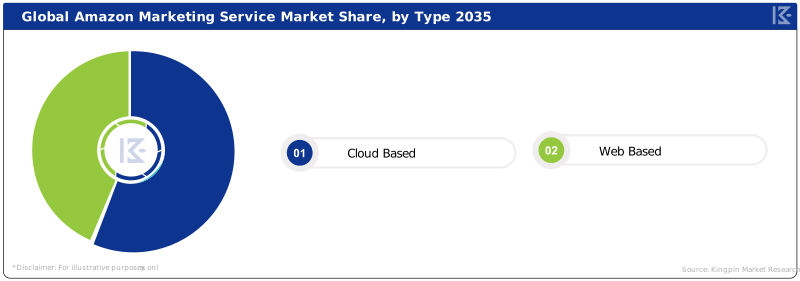
The Amazon Market is segmented by type and application. Cloud-based solutions account for approximately 72% of market utilization due to scalability, automation, and integration capabilities. Web-based solutions contribute 28%, particularly among smaller organizations requiring simplified deployment. By application, large enterprises represent approximately 58% of service demand because of extensive marketplace operations, advanced advertising requirements, and international expansion activities. SMEs account for 42% of demand, leveraging marketplace services to reach larger customer audiences. Increased digital transformation, AI implementation, and fulfillment service adoption continue supporting both segments across global commerce environments.
BY TYPE
Cloud-Based: Cloud-based solutions dominate the Amazon Market with approximately 72% market share. These solutions enable sellers and service providers to manage inventory, advertising, analytics, fulfillment, and customer engagement through centralized digital platforms. More than 82% of professional sellers utilize fulfillment and cloud-integrated services to optimize operational performance. Cloud-based technologies support automated inventory forecasting, AI-powered advertising, and real-time performance monitoring. Large brands managing more than 100,000 product listings rely heavily on cloud infrastructure for scalability. The segment benefits from increasing digital commerce adoption, cross-border trade requirements, and data-driven decision-making. Cloud deployment remains preferred due to flexibility, security, and integration with logistics and advertising systems.
Web-Based: Web-based solutions account for approximately 28% of the Amazon Market. These platforms are widely adopted by SMEs and emerging sellers seeking cost-effective marketplace management tools. Web-based services support listing management, pricing optimization, order tracking, and performance analysis without extensive infrastructure requirements. Approximately 42% of small sellers utilize web-based software to streamline marketplace operations. The segment remains important for businesses entering digital commerce for the first time. Growth is supported by increasing internet penetration, browser-based accessibility, and demand for simplified marketplace management solutions. Web-based platforms continue evolving through AI integration, mobile compatibility, and enhanced reporting capabilities.
BY APPLICATION
Large Enterprises: Large enterprises account for approximately 58% of Amazon Market service utilization. These organizations operate extensive product portfolios, often exceeding 50,000 stock-keeping units, and require advanced marketplace management capabilities. Enterprise users invest heavily in advertising, analytics, fulfillment optimization, and international expansion strategies. More than 82% of major marketplace brands utilize automated fulfillment systems. Enterprise demand is driven by omnichannel commerce integration, supply chain visibility, and large-scale inventory management. AI adoption rates among enterprise users exceed 35%, enabling sophisticated forecasting and campaign optimization. The segment continues expanding as multinational organizations prioritize digital commerce transformation.
SMEs: SMEs represent approximately 42% of the Amazon Market application segment. Small and medium-sized enterprises increasingly rely on marketplace platforms to access large customer bases without investing heavily in physical retail infrastructure. More than 550 new sellers join the marketplace daily, many of whom are SMEs. Digital advertising, fulfillment services, and marketplace analytics help smaller businesses compete effectively against larger brands. Approximately 86% of marketplace sellers achieve profitability according to industry surveys. SMEs benefit from flexible entry requirements, global reach, and automated commerce tools. Increasing entrepreneurial activity and digital business adoption continue supporting segment growth.
Amazon Market Regional Outlook
Download FREE Sample to learn more about this report.
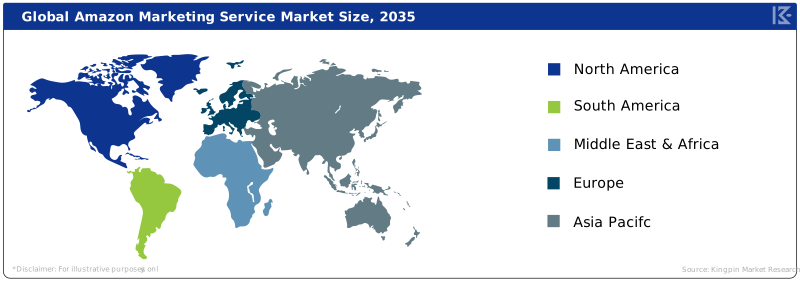
The Amazon Market demonstrates strong regional diversity. North America remains the largest regional market with approximately 46% share, driven by high consumer spending and seller activity. Europe contributes 27%, supported by mature e-commerce infrastructure. Asia-Pacific accounts for 21% due to increasing online shopping adoption and cross-border trade expansion. Middle East & Africa hold 6% share, benefiting from digital transformation initiatives and rising internet penetration. Regional performance is influenced by logistics infrastructure, marketplace penetration, consumer behavior, and technological adoption.
NORTH AMERICA
North America holds approximately 46% of the Amazon Market and remains the most developed regional segment. The United States contributes the majority of marketplace activity, supported by approximately 170 million Prime members and more than 255 million active users. Over 1.1 million active sellers operate within the U.S. marketplace ecosystem. Third-party sellers account for more than 60% of units sold, highlighting strong merchant participation. The region benefits from advanced logistics networks, including thousands of fulfillment facilities and delivery hubs. Approximately 82% of professional sellers utilize fulfillment services to improve delivery performance. Consumer demand remains strong across electronics, home goods, apparel, health products, and grocery categories. Mobile commerce continues expanding as shoppers increasingly use digital applications for purchasing decisions. Artificial intelligence adoption is also significant, with hundreds of thousands of sellers using AI-based optimization tools. Enterprise-level advertisers allocate substantial budgets toward sponsored product campaigns and retail media placements. The region's digital infrastructure supports rapid product delivery, advanced analytics, and integrated commerce solutions. These factors collectively strengthen North America's leadership position within the Amazon Market.
EUROPE
Europe accounts for approximately 27% of the Amazon Market and represents one of the most mature e-commerce regions globally. Countries including Germany, the United Kingdom, France, Italy, and Spain contribute significant marketplace activity. More than 25% of global seller participation originates from European marketplaces. Cross-border trade remains a major growth driver, with sellers increasingly serving customers across multiple countries. European consumers demonstrate strong preference for online shopping, particularly in categories such as electronics, fashion, home improvement, and personal care. Marketplace operators continue investing in fulfillment centers and delivery infrastructure to improve customer experience. Digital advertising adoption has increased significantly as brands compete for search visibility. Cloud-based marketplace management solutions account for more than 70% of enterprise deployments throughout Europe. Sustainability initiatives are also influencing purchasing behavior, with many consumers preferring environmentally responsible products and packaging. Strong internet penetration, advanced payment systems, and regulatory support for digital commerce continue strengthening the region's position in the Amazon Market.
ASIA-PACIFIC
Asia-Pacific represents approximately 21% of the Amazon Market and is among the fastest-evolving regional segments. Rapid digitalization, expanding internet access, and increasing smartphone adoption support marketplace growth. Countries including India, Japan, Australia, and Singapore contribute significantly to regional activity. India remains particularly important due to its large consumer base and growing online retail sector. Marketplace participation among local sellers has increased substantially, supported by digital payment adoption and logistics improvements. Mobile commerce contributes a significant share of transactions throughout the region. Cross-border commerce continues expanding as sellers access customers across multiple international marketplaces. AI-powered listing optimization, automated advertising, and fulfillment technologies are increasingly utilized by regional merchants. Consumer demand for electronics, fashion, home products, and healthcare items remains strong. Asia-Pacific also benefits from growing SME participation, with digital commerce providing access to international markets. These factors continue supporting regional expansion within the Amazon Market.
MIDDLE EAST & AFRICA
The Middle East & Africa account for approximately 6% of the Amazon Market. Although smaller than other regions, the segment demonstrates strong digital commerce potential due to increasing internet penetration and smartphone usage. Urban populations across major markets are rapidly adopting online shopping platforms. Consumer demand is strongest in electronics, fashion, household goods, and personal care categories. Marketplace sellers increasingly utilize cloud-based solutions to manage inventory and customer interactions. Digital payment adoption continues improving, supporting e-commerce transactions throughout the region. Cross-border purchasing remains important because consumers often seek access to broader product selections. Logistics infrastructure investments are improving delivery performance and supporting marketplace expansion. SMEs represent a large portion of seller participation, leveraging digital commerce to reach regional and international customers. Government initiatives promoting digital transformation and entrepreneurship continue creating favorable conditions for marketplace growth. As connectivity improves and consumer confidence increases, the Middle East & Africa region is expected to strengthen its role within the global Amazon Market.
List of Top Amazon Companies
- Stack Influence
- Channel Key
- Retail Bloom
- Compass Marketing
- Pacvue
- Quiverr
- EliCommerce
- HawkSEM
- Zanoma
- Stella Rising
- Stay Hungry Digital
- FountainheadME
- MACARTA
List of Top 2 Companies Market Share
- Pacvue: Estimated market share of 14% among Amazon-focused enterprise optimization and advertising management service providers, supported by management of more than $1 billion in retail media activities.
- Channel Key: Estimated market share of 11% within Amazon marketplace management services, supporting thousands of product listings and multi-category brand portfolios.
Investment Analysis and Opportunities
The Amazon Market continues attracting investment due to its scale, technological sophistication, and global reach. More than 1.9 million active sellers create demand for marketplace optimization tools, fulfillment solutions, advertising technologies, and AI-powered analytics. Investors increasingly target software providers supporting inventory management, pricing automation, and advertising optimization.
Artificial intelligence represents a major investment area. More than 900,000 sellers utilize AI-assisted listing technologies, creating opportunities for advanced software development. Retail media advertising is another attractive segment as brands allocate larger budgets toward sponsored placements and performance marketing. Cross-border commerce investments continue increasing due to access to over 25 international marketplaces. Logistics infrastructure remains a priority, particularly facilities supporting same-day and next-day delivery. Mobile commerce growth, supported by more than 60 million application downloads in 2025, creates additional opportunities for digital engagement platforms. SMEs and enterprise sellers both require advanced commerce solutions, supporting sustained investment activity across the Amazon Market ecosystem.
New Product Development
Innovation within the Amazon Market increasingly focuses on artificial intelligence, automation, analytics, and retail media technologies. More than 900,000 sellers now utilize AI-generated content solutions for listing creation and optimization. Product development efforts emphasize automated keyword management, predictive inventory planning, and customer behavior analysis. Cloud-based marketplace management platforms account for approximately 72% of deployment activity, encouraging software vendors to expand analytics capabilities and operational automation. New solutions increasingly integrate fulfillment management, advertising optimization, and real-time performance monitoring within unified interfaces.
Mobile-first technologies represent another innovation area, responding to growing consumer use of shopping applications. Developers are introducing advanced dashboards, voice-enabled commerce tools, and AI-powered recommendation systems. Enterprise-focused products emphasize scalability, while SME-oriented solutions prioritize affordability and ease of implementation. Retail media innovation also remains strong. New advertising platforms incorporate machine learning models capable of optimizing bids, targeting audiences, and measuring campaign effectiveness. These technological developments continue improving seller productivity, customer engagement, and marketplace efficiency.
Five Recent Developments
- During 2025, active marketplace sellers reached approximately 1.9 million, while registered seller accounts totaled 9.7 million worldwide.
- In 2025, more than 900,000 sellers utilized AI-powered tools for listing optimization and marketplace management.
- During 2025, fulfillment service adoption reached 82% among professional marketplace sellers.
- In 2025, third-party sellers accounted for over 60% of total units sold across the marketplace ecosystem.
- During 2025, shopping applications recorded more than 60 million downloads, strengthening mobile commerce engagement.
Report Coverage of Amazon Market
This report provides comprehensive coverage of the Amazon Market, including seller ecosystems, deployment models, application segments, regional performance, technology trends, and competitive developments. The study evaluates approximately 9.7 million registered sellers and 1.9 million active merchants participating across global marketplaces. Third-party sellers account for more than 60% of marketplace transactions, highlighting the importance of independent merchant activity. The report analyzes cloud-based and web-based deployment segments, identifying cloud solutions as the dominant category with approximately 72% market share. Application coverage includes large enterprises and SMEs, examining operational requirements, technology adoption, and digital commerce strategies.
Regional analysis spans North America, Europe, Asia-Pacific, and Middle East & Africa, providing insights into marketplace penetration, consumer behavior, and infrastructure development. The study also evaluates fulfillment services, AI-powered seller tools, retail media advertising, and mobile commerce adoption trends. Additional coverage includes investment opportunities, competitive positioning, product innovation, and operational challenges affecting marketplace participants. The report examines emerging technologies such as artificial intelligence, predictive analytics, and automation platforms. Strategic assessment of seller growth, logistics capabilities, advertising evolution, and cross-border commerce provides a detailed understanding of current market conditions and future opportunities within the Amazon Market ecosystem.
| REPORT COVERAGE | DETAILS |
|---|---|
|
Market Size Value In |
USD 19999.3 Billion in 2026 |
|
Market Size Value By |
USD 44420.25 Billion by 2035 |
|
Growth Rate |
CAGR of 9.28% from 2026 - 2035 |
|
Forecast Period |
2026 - 2035 |
|
Base Year |
2025 |
|
Historical Data Available |
Yes |
|
Regional Scope |
Global |
|
Segments Covered |
|
|
By Type
|
|
|
By Application
|
Related Reports

Frequently Asked Questions
The global Amazon Marketing Service Market is expected to reach USD 44420.25 Million by 2035.
The Amazon Marketing Service Market is expected to exhibit a CAGR of 9.28% by 2035.
Stack Influence, Channel Key, Retail Bloom, Compass Marketing, Pacvue, Quiverr, EliCommerce, HawkSEM, Zanoma, Stella Rising., Stay Hungry Digital, FountainheadME, MACARTA
In 2026, the Amazon Marketing Service Market value stood at USD 19999.3 Million.
What is included in this Sample?
- * Market Segmentation
- * Key Findings
- * Research Scope
- * Table of Content
- * Report Structure
- * Report Methodology
Our Clients






.svg)
